
What are bricks, stone, sand and cement? What are their various types? What are the standard dimensions of a brick? How can one identify good-quality bricks, stone, sand, and cement?A detailed discussion... Author: Engr. Dibakar Dey, IIT-Kharagpur, India
Question: What is a brick?
Answer: A brick is a rectangular solid object. It is pliable in its raw (unfired) state and becomes hard after being fired.
Question: What are the dimensions of a brick?
Answer: The dimensions of a brick (length × width × height) are 9.5" × 4.5" × 2.75", or 240mm × 112mm × 70mm.
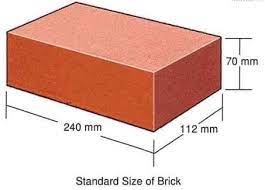
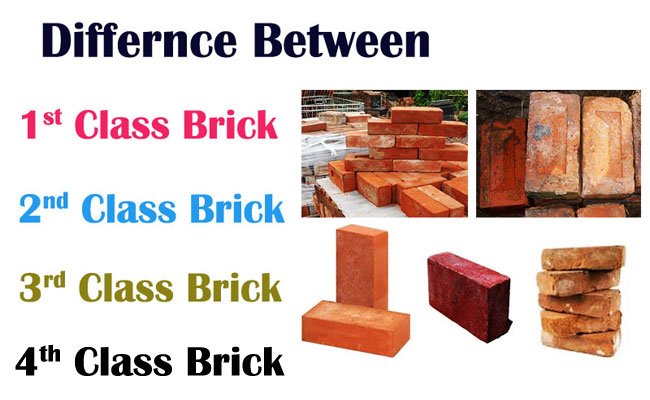
Question: How many types are there, and what are they?
Answer: There are five types of bricks:
-
1st-class bricks
-
2nd-class bricks (Picket Special)
-
3rd-class bricks (Picket)
-
4th-class bricks (Mitha)
-
5th-class bricks (Jhama)
Question: How can you identify a good-quality brick?
Answer: Here are the ways to identify a good-quality brick:
- First-Class Brick (Field Test)
-
These bricks have a uniform, well-defined shape and a deep red color.
-
They are fired evenly throughout.
-
When two bricks are struck together, they produce a clear, ringing (metallic) sound.
-
There are no cracks or fissures.
-
The edges and corners are uniform and well-defined.
-
They do not break easily when dropped onto another brick from a height of 4 feet.
-
Water absorption capacity should not exceed 15%. (Lab Test)
-
Load-bearing capacity is 105 kg/cm². (Lab Test)
2nd Class Bricks (Picket Special):
-
These bricks are similar to 1st class bricks in terms of color and strength.
-
Their size and shape are somewhat irregular.
-
The bottom surface of the brick is uneven.
-
These bricks are slightly under-fired.
-
There are cracks on the surface of the bricks.
-
When struck, they produce a dull sound rather than a sharp, ringing tone.
-
Their water absorption capacity exceeds 15%.
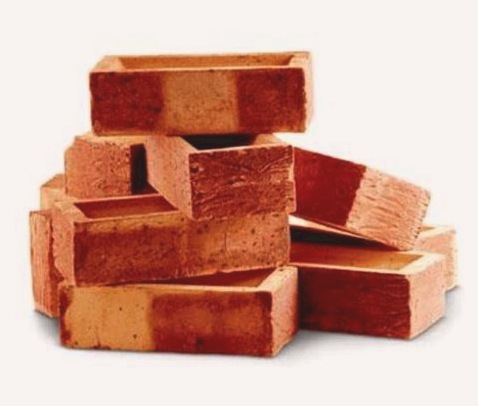
3rd-Class Bricks (Picket):
-
These bricks are not sufficiently fired.
-
They are of inferior quality.
-
They produce a slight ringing sound.
-
Their water absorption capacity exceeds 25%.

4th-Class Bricks (Mitha):
-
These bricks are very lightly fired.
-
Their quality is of the lowest standard.
-
They produce a faint ringing sound when struck.
-
They break easily.
-
Their water absorption capacity exceeds 25%.
5th-grade bricks (overburnt/vitrified bricks):
-
Fired under excessive pressure.
-
They appear black and porous (hollow).
-
They look as though they have developed sores or tumor-like swellings.
-
They are unsightly in appearance.

Rocks: Based on their origin and composition, rocks can be classified into three main categories.
Igneous rocks: Igneous rocks are formed when molten magma or lava cools and solidifies either beneath the Earth's surface or upon reaching the surface. Examples include basalt, granite and syenite.
Igneous rocks are two types: 1) Plutonic rocks (intrusive rocks) and 2) Volcanic rocks (extrusive rocks).
Sedimentary rock: Rocks formed when igneous, metamorphic, or existing sedimentary rocks undergo erosion, and the resulting sediment is deposited in low-lying areas and subsequently compacted and cemented together. Examples include sandstone and shale.
Metamorphic rock: Rocks formed when igneous or sedimentary rocks are altered by exposure to intense heat and pressure, resulting in the creation of a new type of rock. An example is marble.
Igneous rocks: The term "igneous" is derived from the Latin word "ignis," which means fire. Igneous rocks are formed when lava cools and solidifies. This lava originates from rock that has partially melted within the Earth's interior or its crust. Typically, the melting of rock is triggered by one or more of the following factors: an increase in temperature, a decrease in pressure, or changes in composition.

Igneous rocks are divided into two main categories:
1. Intrusive rocks: These are formed when magma penetrates into existing rock formations and cools and crystallizes beneath the Earth's crust. An example of an intrusive—or plutonic—rock is granite.
2. Extrusive (or volcanic) rocks: These are formed when lava or fragmental ejecta, released during a volcanic eruption, reaches the Earth's surface. Known as extrusive rocks, examples include pumice and basalt.
The chemical composition and the rate at which lava cools establish a sequence known as Bowen's reaction series. The crystallization sequence of most igneous rocks follows this series.
Igneous rocks make up approximately 65% of the Earth's crust by volume, making them the most abundant category. Of these, 66% consist of basalt and gabbro, 16% are granite and 17% are granodiorite and diorite. Only 0.6% are syenite and 0.3% are ultramafic. The oceanic crust is 99% basalt an igneous rock that is primarily mafic (rich in magnesium and iron). The continental crust, meanwhile, is composed largely of granite and granite-like rocks, collectively known as granitoids.
Sedimentary rocks: Sedimentary rocks are formed on the Earth's surface through the processes of sedimentation—the accumulation and subsequent cementation of rock fragments, minerals, and the remains of dead organisms or plants, or the deposition and growth of chemical substances and organic matter in water. Through these processes, rock fragments or organic particles aggregate and solidify, while minerals may precipitate from a solution as the solvent evaporates. Subsequently, these particles undergo a process of cementation under ambient temperature and pressure conditions.

Before sediments are deposited, they are formed through the weathering and breakdown of rocks; they are then transported to the site of deposition by agents such as water, wind, ice and glaciers. In terms of volume, sedimentary rocks account for 7.9% of the Earth's crust, while 82% consists of soft, slate-like (argillaceous) rocks. The remainder consists of limestone, sandstone and a type of sedimentary rock known as arkose. Fossils can sometimes be found within certain sedimentary rocks. Sedimentary rocks are formed under the influence of gravity and typically accumulate in horizontal layers, or strata. Perhaps for this reason, they are sometimes referred to as "stratified rocks."
Metamorphic rocks: Metamorphic rocks are formed from other types of rocks—such as igneous or sedimentary rocks—under the influence of varying temperatures and pressures. These physical conditions differ from those under which the original rock was formed. This process is known as metamorphism, which signifies a change in state. As a result, the rock undergoes profound physical and chemical alterations. The initial or original rock is referred to as a 'protolith'.
The process of metamorphism begins with a protolith, which eventually transforms into metamorphic rock. Through recrystallization, the protolith either changes into different types of minerals or assumes a different state of the same minerals. This process requires temperatures and pressures greater than those found at the Earth's surface specifically, temperatures ranging from 150 to 200 degrees Celsius and a pressure of 1,500 bars. In terms of volume, metamorphic rocks account for 27.4% of the Earth's crust.

The three main categories of metamorphic rocks are determined by their formation processes. When rocks come into contact with lava, they are exposed to high temperatures, triggering a process known as "contact metamorphism"—a transformation driven primarily by heat. Another type, known as "burial metamorphism," occurs when rock layers are buried deep underground; in this case, pressure plays a dominant role, while temperature has a minimal effect. This type of transformation can be seen in rocks like jade. When both heat and pressure play a role, the process is called regional metamorphism. This typically occurs in mountainous regions.
Based on their structure, metamorphic rocks are divided into two general categories: those with a layered external structure are called foliated metamorphic rocks, while the others are known as non-foliated metamorphic rocks. Rocks are named based on the minerals they contain. Schist is a type of foliated metamorphic rock composed of platy minerals, such as mica. Gneiss, on the other hand, is characterized by visible, alternating light and dark bands; a common example of this type of rock is granite gneiss. Other types of foliated metamorphic rocks include slate, phyllite and mylonite. Examples of non-foliated metamorphic rocks include marble, soapstone and serpentinite. Another rock in this category is quartzite, which is a metamorphic form of sandstone and hornfels.
1. What is stone?
Answer: Stone is a very hard, strong, and durable engineering material. It is the commercially produced form of rock.
2. Which material is known as the 'king' of construction materials?
Answer: Stone.
3. Where is stone obtained from?
Answer: From rock.
4. What is used to break stones collected from rocks or quarries?
Answer: A Jaw Crusher machine.
5. Why is stone considered the king of construction materials?
Answer: Because there is no other material used in construction that is as strong and durable as stone.
6. Into how many categories is stone classified based on its chemical composition?
Answer: 3 categories (siliceous, argillaceous, and calcareous).
7. What is the primary component of calcareous (lime-based) stone?
Answer: CaCO3
8. What types of stone are used for ornamentation and decorative work?
Answer: Marble and granite.
9. How many methods are used for stone extraction?
Answer: 4 methods (excavation, heating, wedging, and blasting).
10. What is the crushing strength of granite?
Answer: 11,000 tonnes/sq. m.
11. Is any equipment used to test the abrasion resistance (durability/wear resistance) of stone?
Answer: Los Angeles Abrasion (test).
12. What percentage of water do sandstone and marble absorb?
Answer: 20% and 1%
13. How many cast iron balls are there in a Los Angeles abrasion machine?
Answer: 12
14. What type of stone fragments are used in terrazzo flooring?
Answer: Marble
Quiz for You
1. Which type of stone is used to level the surfaces of plastered walls and floors?
2. What are some of the field and laboratory tests conducted on stone?
3. What is meant by "3/4" down-grade" and "well-graded" stone?
4. Which type of stone is best suited for piling work?
5. What kind of stone is used as ballast for railway tracks?
6. Suppose a truckload of stone arrives at your construction site; how would you determine the volume of stone (in cubic feet or cubic meters) contained in the truck?
Sand: Sand is an essential component in construction, composed primarily of silica. It is typically found along the shores of seas or rivers, as well as on the beds of oceans and rivers.
Sand can generally be categorized into three types:
-
Pit sand
-
River sand
-
Sea sand
Pit sand: This type of sand is obtained by excavating pits in the ground. It is smooth, angular, and free from harmful salts. Pit sand is commonly used in the preparation of mortar.

River Sand: This type of sand is found along riverbanks. It is fine-grained and rounded in shape. Being finer than pit sand, it is used for plastering work.

Sea Sand: This type of sand is found along the seashore. Like river sand, it is fine and rounded in shape; however, it contains harmful salts.

Coarse Sand: The grains of this type of sand are relatively larger in size, making it highly suitable for concrete casting in construction work. 'Sylhet sand' is a common variety used in the preparation of concrete.

Precautions for Using Sand
Sand must be free from any kind of impurities, such as mud or clay. Saline (salt-containing) sand must not be used. Before construction, the sand should be thoroughly washed to remove any adhering mud, salt, dirt, vegetation, twigs or pebbles.
Testing of Sand
The following tests are required to evaluate the quality of the sand.
-
Take some sand between two fingers and rub it; if any dust-like particles stick to your fingers, it indicates that the sand contains dust.
-
You can also test the sand by tasting it; placing a small amount in your mouth will help determine if it contains any salty substances.
-
Alternatively, place some sand into a clean glass of water and wait for a while. If the sand contains dust, a layer of it will form on top of the sand.
-
Place some 3% caustic soda solution into a bottle, add a small amount of sand, seal the bottle, shake it for a while, and then leave it undisturbed for 24 hours. If the color of the mixture in the bottle changes to brown, it indicates that the sand contains chemical substances.
-
Examine the sand carefully; if it contains stones, bits of coal or any other impurities, it is best not to use it. Another method is to fill half a glass with the sand, add water to fill the rest of the glass and stir it thoroughly with a spoon. If the sand contains impurities, the water will become discolored or cloudy.After the sand has settled, check the thickness of the soil layer on top of it; if this layer is too thick, the sand should not be used. If such sand is inadvertently acquired and subsequently found to be unsuitable for use, there is no need to worry there are ways to clean it.
-
Sand can be cleaned by washing: pour water over a pile of sand, which will cause the dirt and soil to settle at the bottom. Next, mix the sand thoroughly using a spade, then sift it through a sieve. The sand will become clean.
-
Using substandard or damp sand can cause problems. Workers often prefer to add extra water to the mortar mix; however, if the sand is already excessively wet, it can weaken the construction. Therefore, if you notice that the sand is damp, instruct the contractor to add water only in accordance with the engineer's recommendations.
Conventionally, sand is categorized into three types:
-
Fill sand (Viti sand): This type has a Fineness Modulus (FM) of 0.5 to 0.7 and is used for filling purposes.
-
Local sand: This type has an FM of 1.2 to 1.8 and is used for masonry and plastering work.
-
Coarse sand: This type is abundantly found in the Sylhet region. It has an FM of 2.3 to 2.8 and is used for concrete casting.
Angular sand is preferable to rounded sand. Coarse sand is best suited for concrete casting. Sand is classified as a "fine aggregate." It should be clean and free from silt or clay.
Cement: 'Cement' is a general term for a group of powdery substances that, when mixed with water or another liquid, form a pliable, mud-like material; over time, this mixture sets and hardens into a solid substance of varying degrees of strength.
Cement is the primary material used in all types of construction, including buildings, roads, and bridges.
There are several types of cement. For example:
-
Portland cement
-
Pozzolana cement
-
High-alumina cement
-
Corrosion-resistant cement
-
Water-resistant cement
-
Colored cement, etc.
Among these, Portland cement is the most widely used.
The main components of cement include limestone, silica (sand), iron oxide, etc. These components can be categorized into two groups:
a. Calcareous (lime-based) materials (e.g. chalk, limestone).
b. Argillaceous (clay-based) materials (e.g. silica, iron oxide, alumina).
A. Q. What is cement?
Answer: Cement is a general term for a group of powdery substances that, when mixed with water or another liquid, form a pliable, paste-like material. Over time, this mixture sets and hardens into a solid substance of varying degrees of strength. Cement is used in almost all types of engineering projects. It makes construction work easier and enhances the durability of the finished structure. Cement is available in various types, tailored to the specific requirements and quality standards of the work at hand.
B. Types:
Answer: Cement is primarily of two types, namely:
1. Natural cement
2. Artificial cement
Natural cement: Natural cement is obtained by burning natural limestone which contains 25% to 40% clay and the remainder as calcium carbonate and grinding it into a fine powder.
Artificial cement: Limestone is mixed with clay in the correct proportions and ground into a powder; this mixture is then heated in a kiln to form clinker. Grinding this clinker into a fine powder yields artificial cement.
Among the various types of artificial cement, Portland cement is the most widely used.
C. Field-level testing methods for cement:
1. If the cement feels cool to the touch when you put your hand into the bag, it is of good quality.
2. If a handful of cement sinks when dropped into water, it is of good quality.
3. If the cement feels like a fine powder when rubbed between two fingers, it is of good quality.
4. If the cement holds together when gathered into a fist, it is of good quality.
D. Tests conducted on cement in the laboratory:
1. Setting time test
2. Soundness test
3. Fineness test
4. Tensile strength test
5. Compressive strength test
6. Chemical composition test
E. The list of acidic and basic components of Portland cement is as follows:
1. Calcium oxide - 63%
2. Silica - 22%
3. Alumina - 7%
4. Iron oxide - 3%
5. Magnesium oxide - 2%
6. Sulfur trioxide - 2%
7. Alkaline substances - 1%
F. The differences between OPC and PCC cements are discussed below:
1. OPC – Ordinary Portland Cement.
2. OPC contains 95–100% clinker.
3. It contains 0–5% gypsum.
4. OPC does not contain fly ash, limestone, or similar additives.
5. OPC is widely used for concrete casting work.
6. OPC exhibits higher compressive strength compared to PCC.
7. This cement attains its full strength in 28 days.
8. OPC has a relatively fast setting time, which facilitates the removal of shuttering after a specified period.
1. PCC - Portland Composite Cement
2. PCC contains 67–79% clinker.
3. It contains 2–7% gypsum.
4. PCC contains 21–35% fly ash and/or limestone.
5. This cement is widely used for masonry and plastering work.
6. It is also used for concrete casting; however, for the same mix ratio, PCC exhibits lower compressive strength compared to OPC (Ordinary Portland Cement).
7. PCC does not reach its full strength within 28 days; it requires a longer period to attain it.
G. The uses of various types of Portland cement are discussed below:
1. High early-strength Portland cement - for rapid setting.
2. Clay cement – for marine construction projects.
3. Colored cement – for mosaic work and various decorative/aesthetic purposes.
4. Aluminous cement – attains 75% of its strength within 24 hours.
5. Pozzolanic silica cement – for the construction of fire-resistant surfaces.
6. White cement – for decorative and aesthetic purposes in mosaics, swimming pools, bathrooms, etc.
G. Some brands of cement produced in Bangladesh are:-
1. Scan Cement
2. Holcim Cement
3. Seven Rings Cement
4. Shah Cement
5. Bashundhara Cement
6. Premier Cement
7. Anwar Cement
8. Akij Cement
9. Metrocem Cement
10. Crown Cement
Very Short Questions
1. In the dry process of cement manufacturing, the mixture of raw materials is called 'raw mix'.
2. The initial setting time of Ordinary Portland Cement is 30 minutes.
3. The final setting time of Ordinary Portland Cement is 10 hours.
4. The weight of one bag of white cement is 40 kg.
5. No more than 10 bags of cement should be stacked one on top of another.
6. If cement is used three months after its production, its setting time and strength decrease by 2%.
7. The weight of one cubic meter of cement is 1440 kg/m³.
8. The weight of one bag of cement is 50 kg.
9. One bag of cement is 1.22 cft.
10. One cubic meter of cement equals 30 bags.
11. Portland cement is the most widely used type.
12. The two primary components used in the production of cement are calcareous (lime-based) and argillaceous (clay-based) materials.
13. The term 'cement' originates from the Roman language.
14. Alumina accelerates the setting process of cement.
15. Cement is manufactured using two methods.
16. The Vicat apparatus is used to determine the setting time of cement.
17. Low-heat cement is used in the construction of dams.
18. Bashundhara Cement was used in the construction of the Padma Bridge.
19. Air-entraining cement is used in areas covered with ice (snow/frost).
20. Ordinary Portland cement is used for heavy-duty (high-strength) construction work.